Jenn Jansen is an interdisciplinary artist and educator based in the village of Zuidlaren, Drenthe. She lives with her husband and daughter near a heathland nature reserve in the northern Netherlands, a landscape that forms the wider context in which her practice takes place.
Her work is centered in the in-between space where inner experience meets the material world. Through sustained engagement with textiles, plants, pigments, writing, and movement, she investigates how meaning is formed through relationship, attention, and time. Local plants, repurposed and thrifted cloth, and found materials enter her work not as symbols of place, but as specific encounters within an ongoing, embodied inquiry.
The prehistoric dolmens scattered throughout the Drentse countryside are one such presence. Their stone forms—heavy, steady, and enduring—recur in her work as shapes of gravity and quiet wisdom. They sit alongside plant forms, textures, and gestures as part of a wider visual and material vocabulary, rather than occupying a singular or dominant role.
Jenn was born and raised in the Pacific Northwest of the United States within a family of women engaged in making. Time spent sewing, teaching, and learning in her mother’s quilt shop—alongside her mother, grandmother, sisters, and niece—contributed to the foundations of her creative values. While shaped by this familial environment, her practice has developed along a distinctly personal path, informed by her own inner life, questions, and ways of working.
She studied French language, fine arts, and art history at Portland State University, and holds a Bachelor of Arts in French and Art History and a Master’s degree in Education. Her interdisciplinary practice brings together textile work, natural dyeing and ink making, writing, photography, performance, and movement-based research, which she approaches as interconnected modes of inquiry rather than separate disciplines.
Studio Handcræft is Jenn’s atelier, housed in a former garage on her family’s Drentse homestead, where making, reflection, documentation, and teaching intersect.
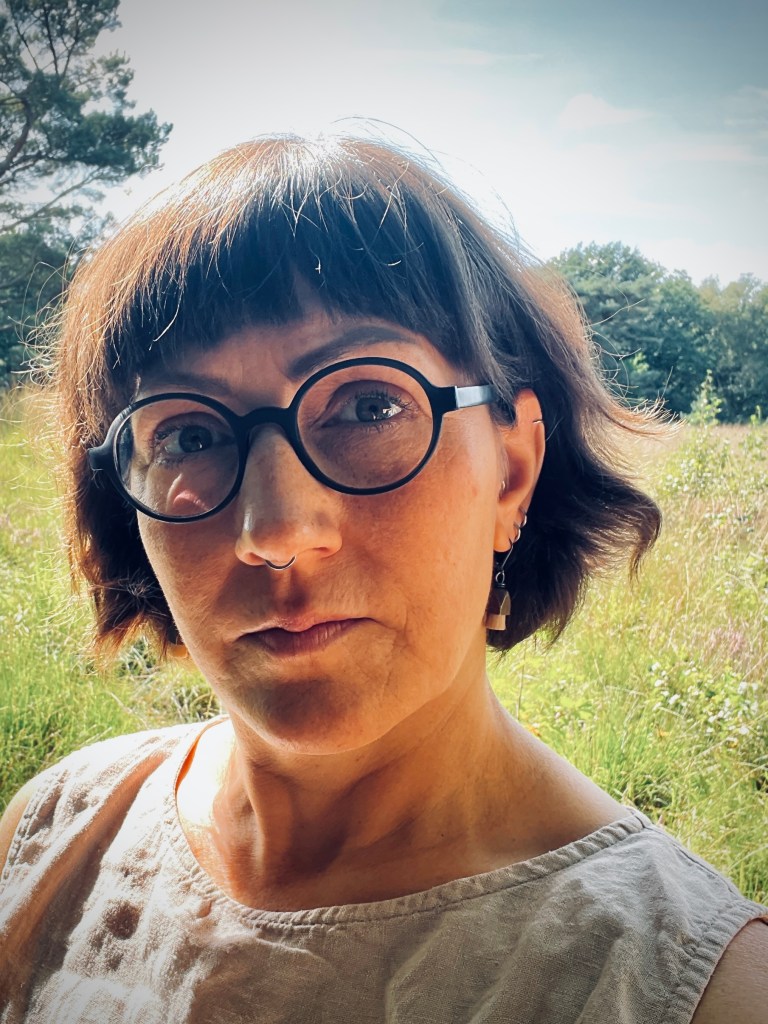
 Jenn Jansen